How to Choose Colored Contact Lenses: A Buyer's Guide
Oct 20,2025 | Eyezalens
Choose a good pair of colored contact lenses can feel complex, with many technical terms and factors to consider, but don’t worry—just follow these 5 steps, and we will help you find the best contact lenses for your vision, comfort, and style needs.
Step 1: Start with the Right Fit – Do You Need Prescription Contact Lenses?
Proper Prescription
Before exploring colors and styles, the first step is always your eye health. This begins with understanding your vision needs and securing a proper prescription. If you have nearsightedness (myopia) or farsightedness (hyperopia), you need prescription lenses with a specific power (PWR). If you only want to change your eye color, you can choose non prescription colored contacts, also known as plano contact lenses, which have zero corrective power.
Contact Lens Parameters (PWR, BC, DIA)
Regardless of your choice, all contact lenses are classified as medical devices. You legally need a valid colored contacts prescription from an eye care professional (ECP) for any purchase in the U.S. and Europe. During a fitting, your ECP measures two critical numbers for a safe fit: the Base Curve (BC), which matches your cornea's shape, and the Diameter (DIA), which ensures the lens covers your eye properly. An incorrect fit can lead to discomfort and potential eye damage. When choosing your colored contact lenses, always make sure to check the detailed specifications—credible sellers will clearly display this information.
-to-help-choose-colored-contact-lenses.webp?w=1024&h=752)
Step 2: Choose the Colored Contact Lenses Matching the Occasion – From Daily Comfort to Halloween Contacts
With your prescription ready, you can now select the lenses that fit your needs for both everyday wear and special occasions. If you want to choose Halloween colored contacts or other cosmetic lenses for themed parties or cosplay events, short-term or special-effect (FX) lenses are a great fit. However, for daily wear at work or school, you should prioritize lenses with high comfort and oxygen permeability to keep your eyes feeling fresh and healthy during long hours.
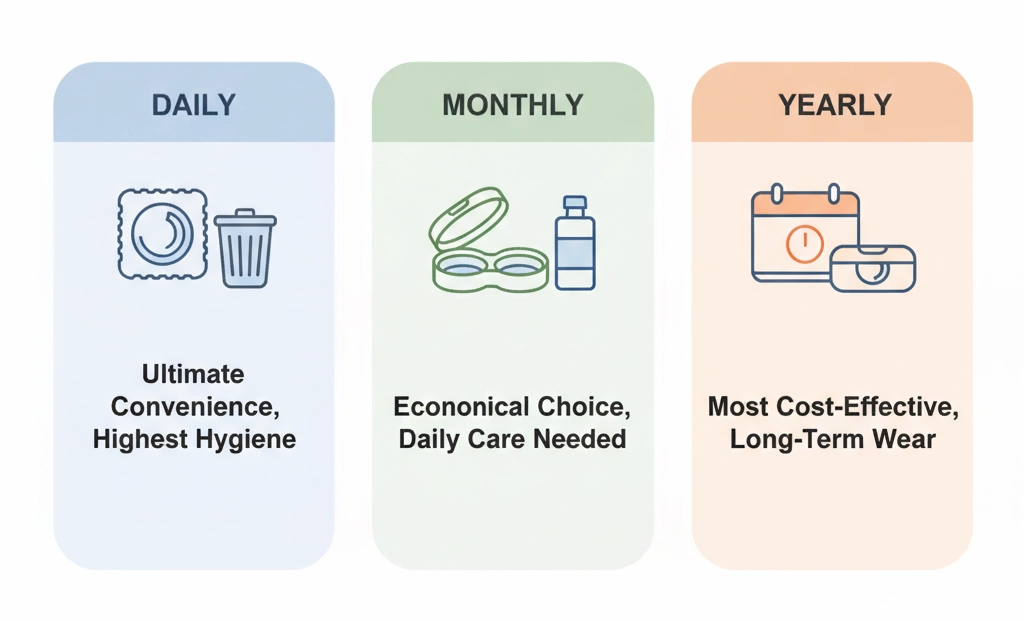
Your lifestyle also helps determine the ideal replacement schedule. The choice between daily vs monthly contacts often comes down to convenience and hygiene.
- DailyWear Contact Lenses
Daily disposable contact is a single-use lenses, these are the most hygienic option. You wear a fresh pair each day and discard them at night, eliminating the need for cleaning. Perfect for first-time wearers, not suitable for long-term, daily wearers because of the higher long-term cost due to daily replacement.
- Monthly Contact Lenses
30 day contact lenses are a more economical choice for frequent wearers, but they still need to be replaced every month, which can be less convenient than yearly lenses.
Like all reusable contact lenses, 1-year contact lenses also require cleaning and disinfecting, as well as regular replacement of the solution. Yearly lenses offer a longer replacement cycle, is a cost-effective solution for long-term wearers. You no longer have to constantly worry about your lenses expiring, and there are more color options available. Often made from higher-quality materials, providing better comfort and cleanliness for long-term wearers.
Step 3: Choose the Right Material for Your Colored Contacts Lenses
The materials for Colored Contact Lenses are typically divided into four types, with the most common being hydrogel and silicone hydrogel. Hydrogel and silicone hydrogel are common materials for soft contact lenses, known for their comfort and suitability for daily wear. Additionally, rigid gas permeable (RGP) lenses and PMMA are mainly used for rigid contact lenses, suitable for users who require high levels of vision correction.
1. Hydrogel
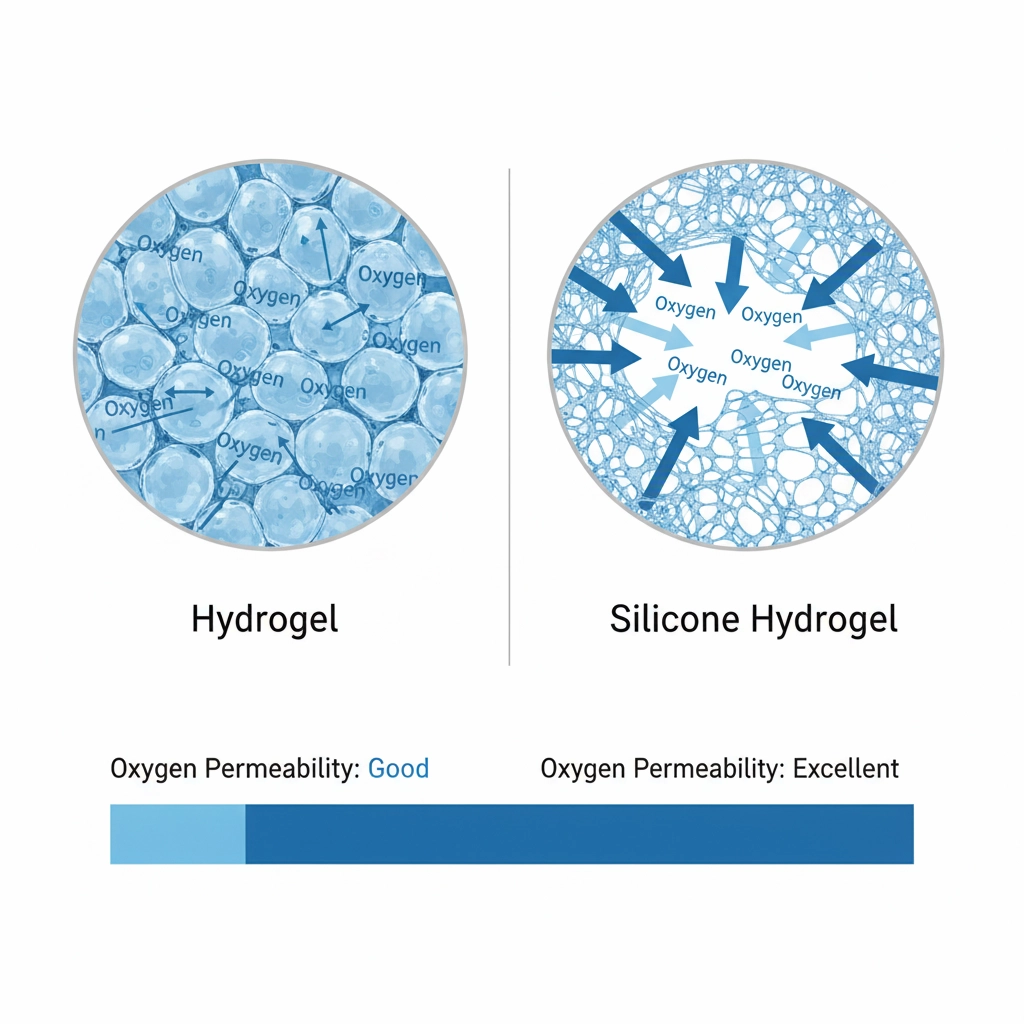
Hydrogel is one of the most common materials for contact lenses, typically containing high water content to provide a comfortable wearing experience.
- Representative Material: PolyHEMA (Polyhydroxyethyl Methacrylate)
- Advantages: High water content, comfortable, cheaper than silicone hydrogel, most widely used colored contact lenses material.
- Disadvantages: For dry eye sufferers, choosing Silicone Hydrogel will offer better oxygen permeability.
2. Silicone Hydrogel
Silicone hydrogel offers higher oxygen permeability, making it suitable for long-term wearers or those with eye conditions to reduce the feel of dryness and discomfort.
- Representative Materials: Lotrafilcon A, Senofilcon A
- Advantages: High oxygen permeability, comfortable, suitable for long-term wear.
- Disadvantages: More expensive.
3. Rigid Gas Permeable (RGP)
RGP contact lenses utilize a rigid, gas-permeable material such as fluorosilicone to provide enhanced oxygen permeability. These are ideal for users who need high levels of vision correction.
- Representative Material: Fluorosilicone
- Advantages: Strong oxygen permeability, excellent vision correction, durable.
- Disadvantages: Less comfortable than soft contact lenses, longer adaptation period.
4. PMMA (Polymethyl Methacrylate)
PMMA is a traditional material used for rigid contact lenses, primarily used for non-oxygen permeable lenses. Due to its poor oxygen permeability, wear time needs to be limited.
- Representative Material: PMMA
- Advantages: Durable and strong.
- Disadvantages: Non-oxygen permeable, less comfortable to wear, limited wear time.
Step 4: Select Your Color and Style
Once you have addressed the technical aspects of fit and comfort, you can focus on the creative part: selecting your new look.
- For Dark Eyes:To achieve a noticeable change, you need lenses with an opaque tint.
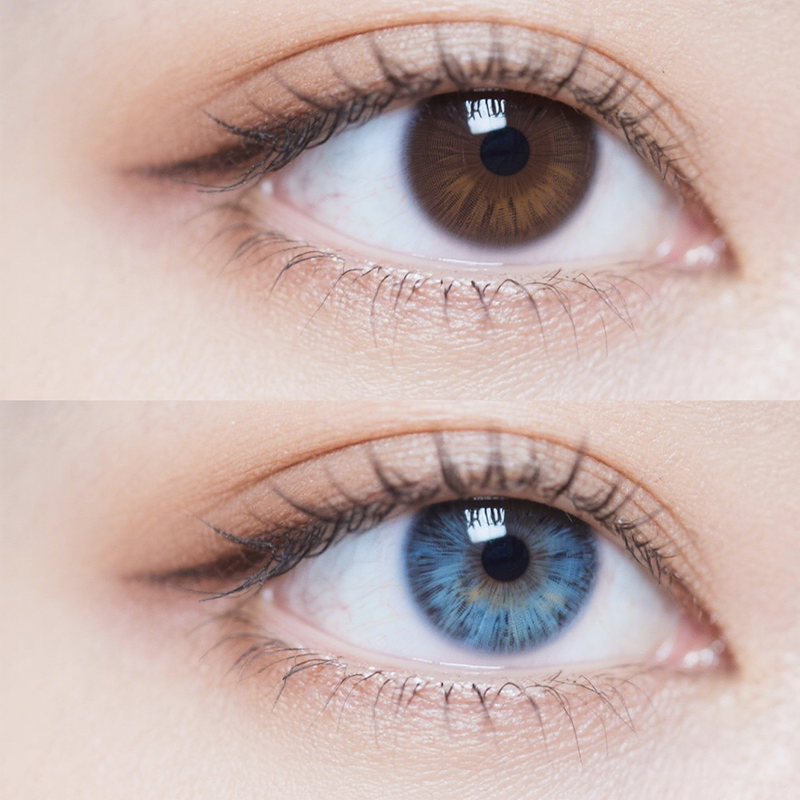
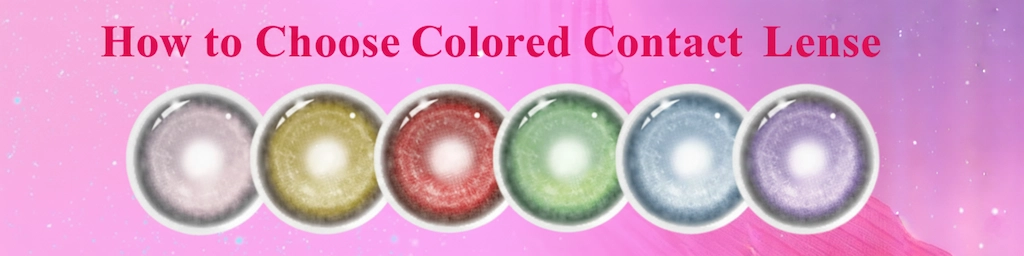
- For Light Eyes:You have more flexibility. Enhancement tints can subtly brighten your natural color, while opaque tints can create a drastic and dramatic change.
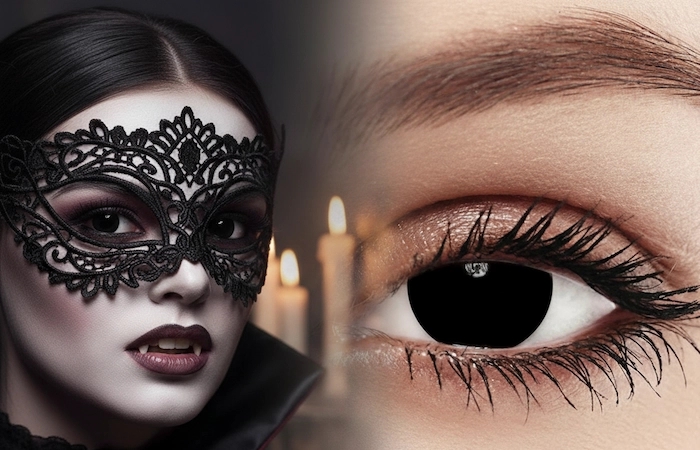
- Styles and Effects:For a subtle, everyday look, choose natural looking colored contacts that feature a dark limbal ring to make your eyes appear more defined and youthful. For a more dramatic "doll-eye" effect, circle lenses have a larger graphic diameter that makes your eyes look bigger. Finally, FX lenses offer unnatural colors and patterns perfect for cosplay and Halloween.
- Additional Features:Some modern lenses also come with additional features like UV protection contact lenses to help protect your eyes from ultraviolet radiation.
Step 5: Last but not least – Choosing a Safe and Reputable Retailer
When you order contacts online, it is vital to choose a specialized retailer over a general marketplace.
- Optometrist's Office:Your ECP provides an expert fitting and personalized advice but often has higher prices and a limited selection of styles.
- General Marketplaces (Amazon, eBay):Avoid buying medical devices from these platforms. There are unregulated among them, and you risk receiving unsafe product.
- Specialized Online Retailers:This is your best and safest choice. A dedicated store for contacts online like eyezalens.com combines professional health standards with the variety and value of an online model. We offer a massive selection of styles, including cheap colored contacts that are still high quality. Every lens is guaranteed authentic and certified by the FDA, CE, and ISO for your safety. Our direct-to-consumer model means lower prices, and you can see how lenses look on real people through thousands of customer reviews and photos.
- EyezaLens — Trusted Beauty, Proven Comfort
Rated 4.1/5 on Trustpilot (“Great”), EyezaLens is loved by customers worldwide.
✔ 92% of users say our lenses feel “very comfortable”
✔ Natural look, certified quality, and safe wear
✔ Dedicated after-sales service for lasting trust
Conclusion
Choosing contact lenses is simple. Start with a valid prescription, then consider your occasions and desired look. By purchasing from a trusted retailer like eyezalens.com to ensure you receive safe, high-quality lenses that let you express your style confidently.
FAQ
Q1: What are contacts made of?
A: Most modern contact lenses are made from soft, flexible materials called hydrogels. It allows high amount of oxygen to pass through the lens to your eyes. This means your eyes can be more comfortable—especially if you wear contacts for long hours.
Q2: How do I put in and take out my contact lenses?
A: For insertion, wash your hands, place the lens on your index finger or the included applicator tool, use your other hand to hold your eye open, and gently place the lens on your eye. To remove, wash your hands, look up, use your finger to slide the lens down to the white of your eye, and gently pinch it off.
Q3: Are colored contacts safe?
A: When prescribed by an ECP and cared for properly, contacts are safe. However, poor hygiene, over-wearing them, or sleeping in lenses not approved for overnight use can deprive your cornea of oxygen and increase the risk of serious eye infections.
Comment